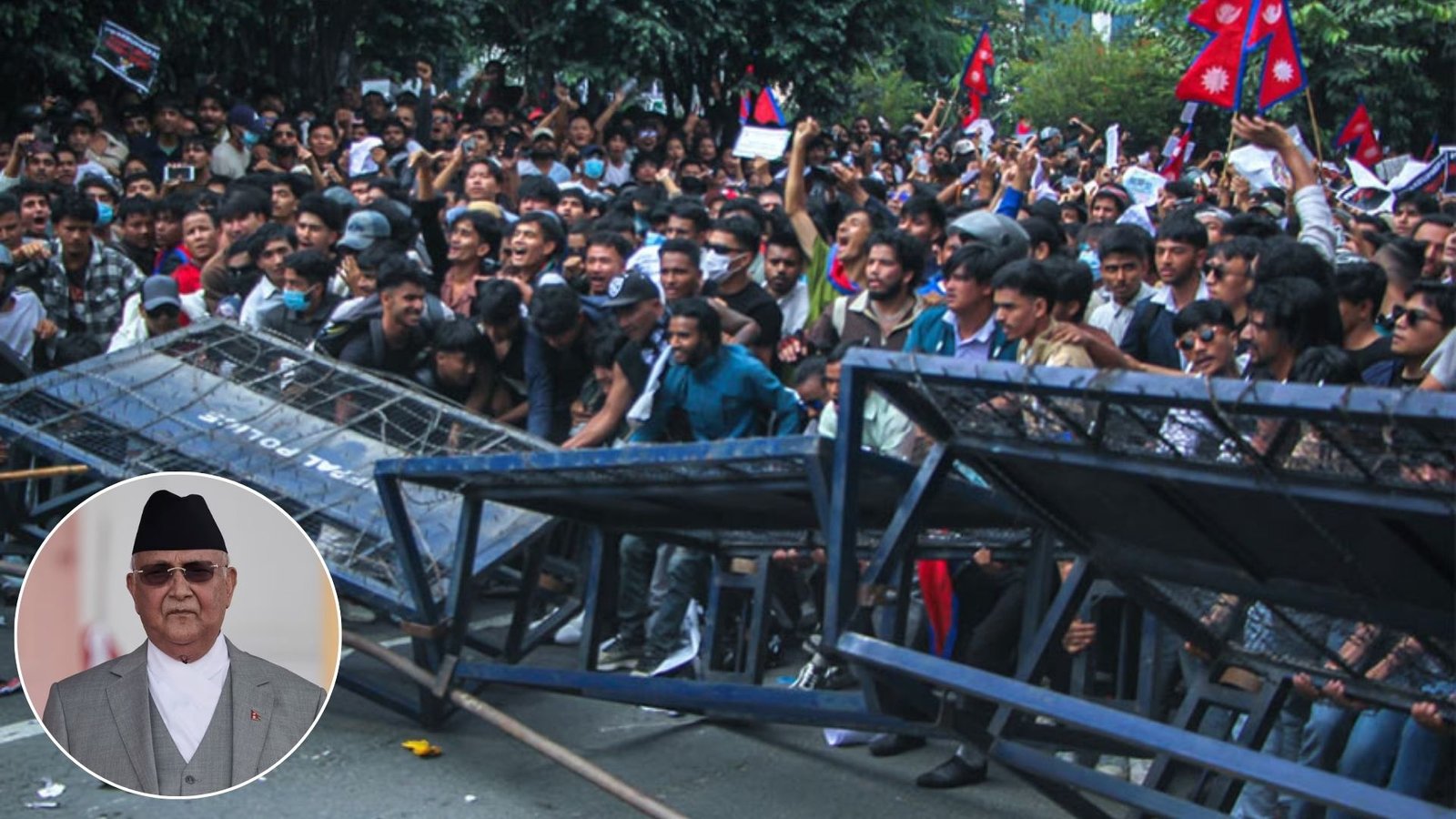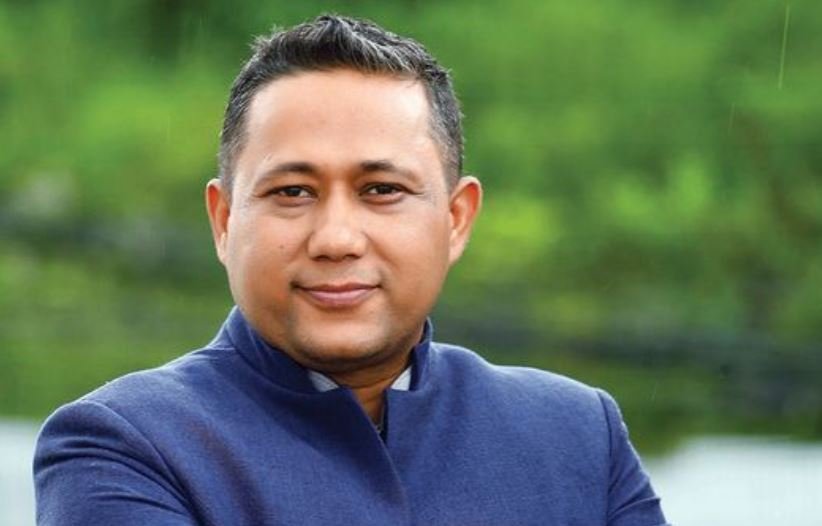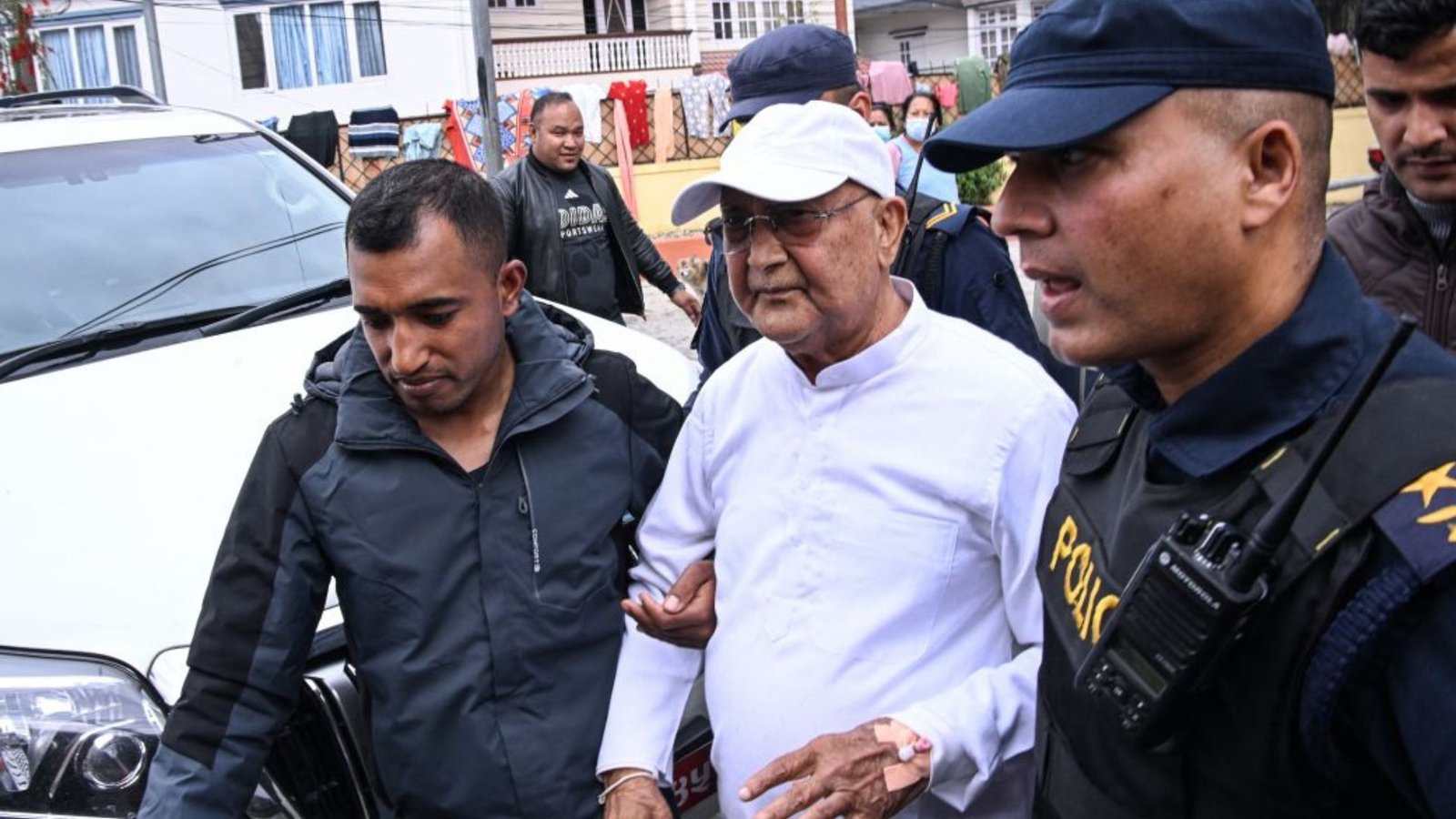
Nepal’s former Prime Minister K. P. Sharma Oli has lost his first legal battle against the new government led by Prime Minister Balendra Shah. Oli was arrested by police on March 28, with authorities holding him accountable for the killing of 19 students during the Gen Z protests on September 8, when he was serving as prime minister. The arrest followed the submission of a report by an investigation panel that examined the violent crackdown on the student protests.
Soon after his arrest, Oli rejected the charges and vowed to challenge the move in court, calling it politically motivated and promising to fight a legal battle against the government. However, the first round of that battle has gone against him.
On March 29, the Kathmandu District Court ruled that the police request to keep Oli and the then Home Minister Ramesh Lekhak in custody was justified.
A bench of Judge Anand Kumar Shrestha described the request for detention as reasonable and granted investigators additional time. The court order stated: “Since the request to keep Oli and Lekhak in custody appears reasonable in content, permission has been granted to extend the custody period by five days to keep them in detention and complete the procedures as mentioned.” As a result, both Oli and Lekhak will remain in judicial custody for the next five days while the investigation continues.
A Wider Crackdown
The developments suggest that the Shah administration’s campaign is not limited to a single case. Authorities have also arrested former Energy Minister Dipak Khadka in connection with a money-laundering investigation. Government sources say more leaders from Nepal’s traditional political parties could face arrest in the coming days. Local media reports further indicate that investigators have launched money-laundering probes against three former prime ministers—K. P. Sharma Oli, Pushpa Kamal Dahal, and Sher Bahadur Deuba.
Investigating the Wealth of Political Elites
In what could become one of the most consequential institutional moves, the Shah government has also decided to form a special commission to investigate the property of public office holders.
The investigation will proceed in two phases:
First phase: Examination of assets accumulated by public officials after 2006, the year that marked the end of Nepal’s monarchy and the beginning of the republican political order.
Second phase: Investigation of property acquired between 1990 and 2006, the period following the restoration of multiparty democracy.
A Turning Point in Nepal’s Politics?
If fully implemented, these investigations could become one of the most sweeping accountability drives in Nepal’s recent political history. For decades, allegations of corruption, abuse of power, and unexplained wealth have surrounded political leaders across party lines. The arrest of a former prime minister—and the possibility that investigations could reach other top leaders—suggests that Nepal may be entering a new and uncertain phase of political reckoning.
For now, the immediate question remains the fate of Oli and Lekhak, who will spend the next five days in custody as investigators continue to build their case.
Meanwhile, since Oli’s arrest, leaders and supporters of the Communist Party of Nepal (Unified Marxist–Leninist) have been organizing a series of street protests, with clashes reported in several parts of the country. Whether this moment evolves into a genuine accountability drive—or turns into a prolonged political confrontation—will likely shape Nepal’s political trajectory in the months ahead.