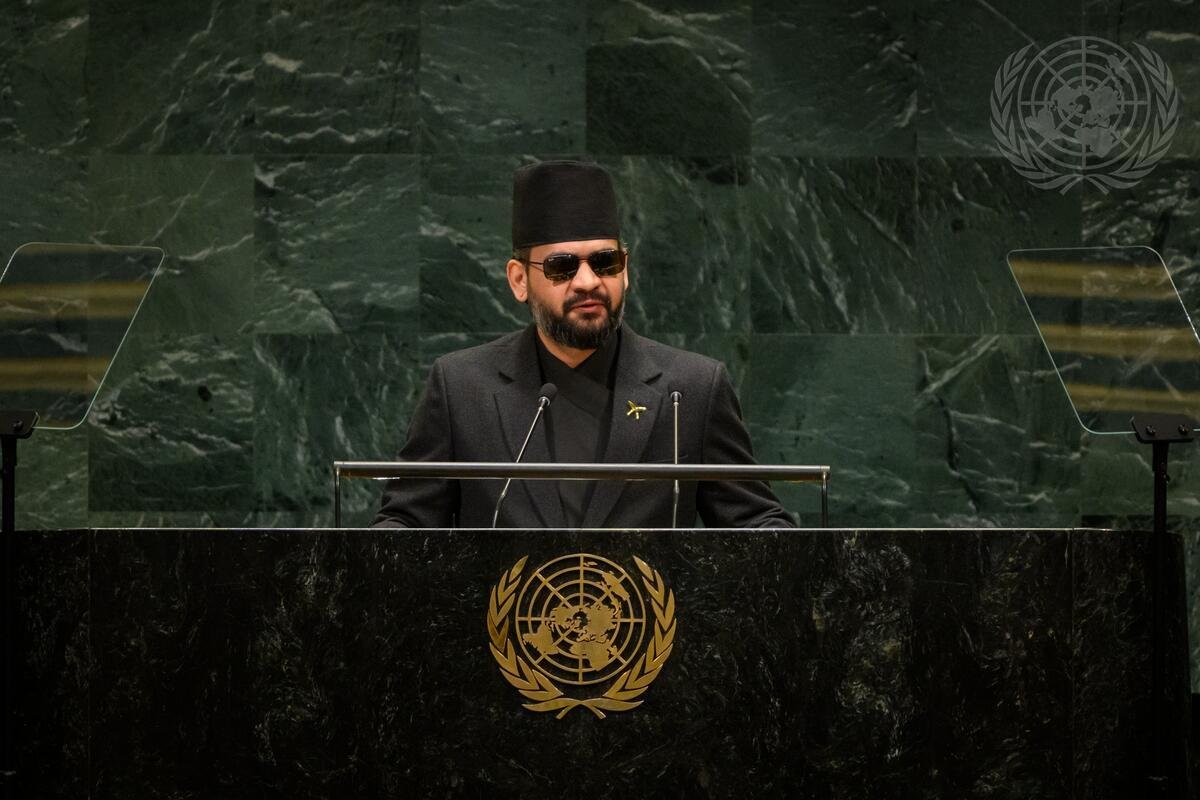
Balendra Shah, Prime Minister of Nepal, said he wished he could speak to the Assembly simply about development, democracy, peace and the hopes of a young nation. “Instead, I must speak about death and destruction of epic proportions.”
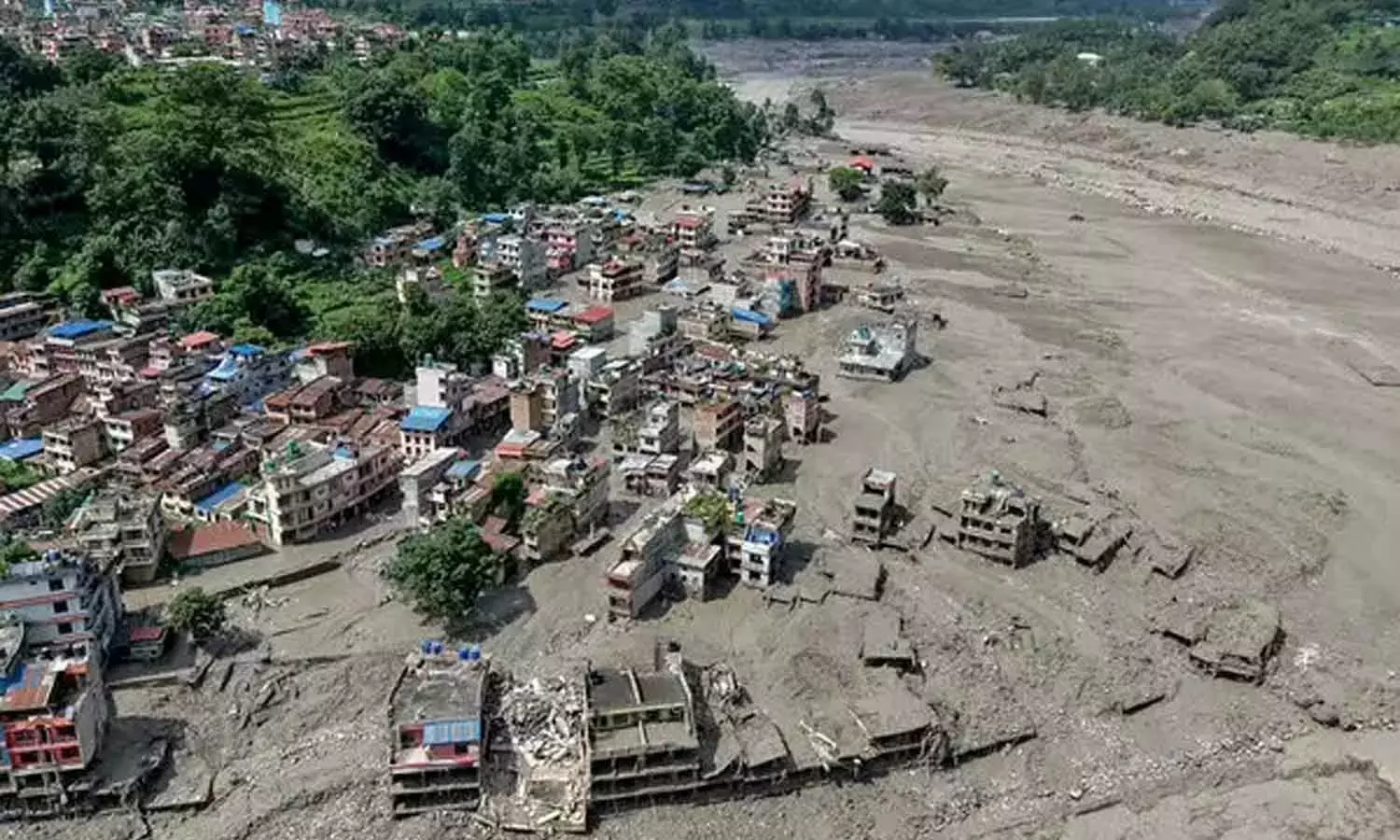
Catastrophic flash floods in Nepal’s mountain communities last month were “not just a local tragedy, it was a warning to the world,” he said.
The resulting devastation unleashed havoc on both sides of the Nepal-China border.
“Climate change does not recognize borders. Glaciers and floods do not travel with a visa stamped on passports,” he said. Yet, the world’s political leaders have been negligent in translating those warnings over the climate crisis into action at the speed and scale that required.
Nepal contributes less than 0.1 per cent of global greenhouse-gas emissions. “We did not create this crisis. Yet we are paying a colossal price for it.” He emphasized: “Our glaciers are retreating. Our mountain slopes are becoming unstable. Our rivers are becoming less predictable.”
For Nepal, climate catastrophe is not just a humanitarian event, but a developmental emergency, erasing years of progress. Noting the UN Framework Convention on Climate Change sets out the principle of common but differentiated responsibilities, he called on everyone to recommit to shared responsibility and solidarity, with those historically contributing more to the problem and those with greater capacity to respond, doing more.
“Climate Justice cannot just remain a beautiful phrase in a United Nations Document,” he said. Nepalis must be “allowed to build their future instead of constantly rebuilding their past.”
The Himalayas are part of the planet’s life-support system. Therefore, he proposed as an urgent first step, establishing a Himalayan Climate Resilience Mechanism, led by Nepal, India, and China, to share data and expertise, assistance, and response.
He underscored that climate justice is “not only about money. It is about distributive justice – who bears the costs. It is about procedural justice — who has a voice.” He said that it is now necessary to “move from ad-hoc responses to a culture of preparedness.