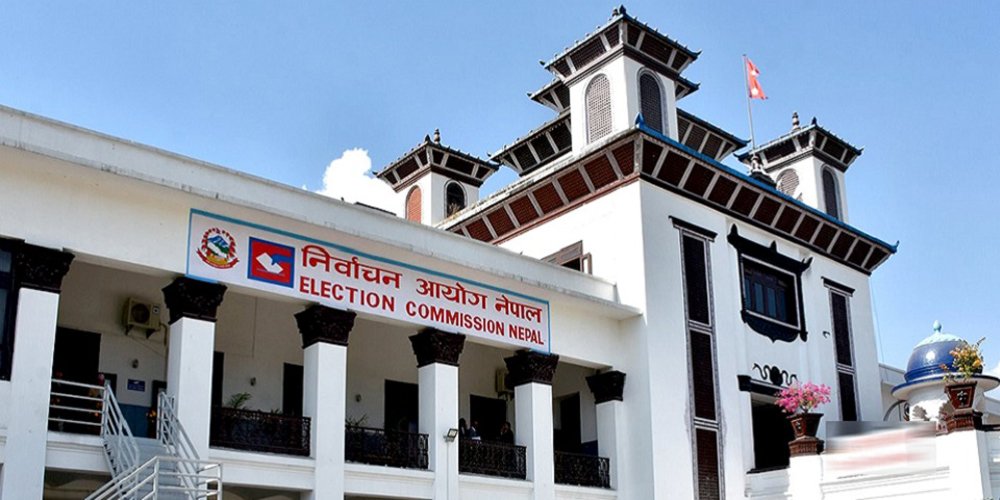
Nepal is heading towards the March 5 elections to elect the new House of Representatives (HoR), which is mandated to elect a new prime minister, formulate laws, and monitor the government. There are the basic details of the March 5 elections.
Voter Statistics
- Total number of votes: 18,903,689
- Male: 9,663,358
- Female: 9,240,131
Candidates under First-Past-the-Post (FPTP)
- Total candidates: 3,406
- Male: 3,017
- Female: 388
- Other category: 1
- Political party-affiliated candidates: 2,263
- Independent candidates: 1,143
Age-wise Breakdown (FPTP Candidates)
- Below 30: 201
- 30–39: 749
- 40–49: 1,077
- 50–59: 894
- 60–69: 395
- 70–78: 83
Candidates under Proportional Representation (PR)
- Total candidates: 3,135
- Male: 1,363
- Female: 1,772
Age-wise Breakdown (PR Candidates)
- Below 30: 168
- 30–39: 686
- 40–49: 991
- 50–59: 741
- 60–69: 419
- 70–79: 118
- Above 80: 12
Inclusion (Representation by Community)
- Dalit: 6.76%
- Muslim: 3.99%
- Tharu: 2.58%
- Khas-Arya: 34.50%
- Madhesi: 24.87%
- Adivasi/Janajati: 27.30%
Election Observers
- National organizations: 39
- International organizations: 4
Deployment of Security Personnel
- Nepal Army: 79,727
- Nepal Police: 75,727
- Armed Police Force: 34,676
- National Investigation Department: 1,921
- Temporary police: 149,090
Election Staff
- 21,500 personnel
Expenditure Limitation
- FPTP candidates: NPR 2.5 million to 3.3 million (depending on geography)
Electoral Structure
- Provinces: 7
- Districts: 77
- FPTP seats: 165
- PR seats: 110
Province-wise FPTP Seats
- Koshi: 28
- Madhesh: 32
- Bagmati: 33
- Gandaki: 18
- Lumbini: 26
- Karnali: 12
- Sudurpashchim: 16
Previous Elections
- 2022
- 2017
- 2013
- 2008
Major Political Parties and Leadership
- Nepali Congress led by Gagan Kumar Thapa
- Communist Party of Nepal (Unified Marxist–Leninist) led by KP Sharma Oli
- Rastriya Swatantra Party led by Rabi Lamichhane
- Communist Party of Nepal (Maoist Centre) led by Pushpa Kamal Dahal
- Rastriya Prajatantra Party led by Rajendra Lingden
How Major Powers Are Viewing the Elections
- United States and Western countries: Prefer the emergence or victory of new political parties or reform-oriented leaders within traditional parties.
- China: Favors a sizeable presence of traditional political parties committed to implementing past bilateral agreements.
- India: Maintains a balanced approach, engaging with both traditional and emerging political parties.